Why Your Strategy Fails as AI Complexity Rises (And How to Fix Decision Integrity)
Jan 26, 2026
Why Your Strategy Fails as AI Complexity Rises (And How to Fix Decision Integrity)
![[HERO] Why Your Strategy Fails as AI Complexity Rises (And How to Fix Decision Integrity)](https://cdn.marblism.com/q1blTsx52Yx.webp)
You've got a solid sales strategy. Your team knows the playbook. The goals are clear. And yet, things aren't clicking the way they should.
Revenue is inconsistent. Decisions feel scattered. Your best people seem to be pulling in different directions, even when everyone agrees on the destination.
Here's the uncomfortable truth we've been wrestling with alongside leaders just like you: the problem isn't your strategy. It's your decision integrity.
And as AI complexity rises inside your organization, that integrity is quietly eroding, faster than most of us realize.
The Real Problem Isn't Performance. It's Decision Fragmentation.
When results slip, our instinct is to look at performance metrics. We dig into activity numbers, pipeline velocity, close rates. We tweak the training. We adjust comp plans. We bring in new tools.
But what if the issue isn't how your team is performing, it's how decisions are being made across your organization?
We call this decision integrity: the ability of your leadership structure to maintain coherent, aligned judgment even as complexity increases. When decision integrity breaks down, you don't just get bad outcomes. You get inconsistent outcomes. You get smart people making reasonable choices that somehow don't add up to a unified strategy.
Sound familiar?

AI Is Accelerating the Breakdown
Let's be honest, AI in sales is no longer optional. From predictive analytics to conversational intelligence to automated forecasting, these tools promise speed, precision, and scale.
And they deliver. Sort of.
The challenge is that AI doesn't just add capability. It adds complexity. Every new tool generates new signals. Every new signal demands interpretation. And every interpretation becomes a micro-decision that may or may not align with your broader sales strategy.
According to recent research, 62% of companies cite poor cross-functional fit and 63% flag the need to adjust workflows as leading barriers to successful AI adoption. That's not a technology problem, that's a leadership structure problem.
Here's what we're seeing in the field:
- Fragmented judgment. Different team members interpret AI outputs differently, leading to conflicting actions.
- Loss of decision coherence. The sheer volume of AI-generated insights overwhelms leadership's ability to synthesize and direct.
- Eroded accountability. When AI influences a decision, it becomes harder to trace who owns the outcome.
The result? Your strategy stays the same on paper, but execution drifts. And the drift accelerates as AI complexity rises.
The Gap Between Ambition and Execution
Gartner reports that at least 30% of generative AI projects will be abandoned after proof of concept due to poor data quality, inadequate risk controls, or unclear business value.
Thirty percent. That's not a rounding error, that's a systemic failure.
Why does this happen? Because organizations pursue AI as an exploratory technology rather than a solution to specific business problems. When AI initiatives lack direct connection to key performance indicators, they struggle to gain organizational adoption and momentum.
But here's the part that hits closer to home for us in sales leadership coaching: even when AI succeeds technically, it can still fracture your decision-making.
Think about it. Your CRM's AI suggests one set of priority accounts. Your conversational intelligence tool flags different coaching opportunities. Your forecasting model predicts outcomes that don't match your gut, or your VP's gut.
Who decides which signal to trust?

That question, "Who decides?", is the heart of decision integrity. And too often, the answer is "everyone and no one."
Generic AI Leads to Generic Strategy
Here's another trap we see: companies using commoditized AI inputs produce generic outputs. When everyone's using the same tools with the same data, strategies become indistinguishable.
Your competitors have access to the same predictive models. The same intent data providers. The same automation platforms.
If AI is your differentiator, it's not much of a differentiator.
What is a differentiator? The quality of your decision-making process. Research shows that the quality of strategy development processes matters far more than the quality of insights alone. High-quality processes include developing multiple strategic alternatives, properly accounting for uncertainty, and actively removing bias from decisions.
In other words, the winners aren't the ones with the best AI. They're the ones with the best judgment discipline.
How to Fix Decision Integrity
Alright, enough diagnosis. Let's talk solutions.
Restoring decision integrity isn't about rejecting AI: it's about rebuilding your leadership structure to stay ahead of AI complexity. Here's how we approach it:
1. Lead with Business Problems, Not Technology
The most effective AI programs begin with identifying particular business challenges: customer churn, pipeline leakage, forecast accuracy: not with preferences to apply certain models.
Before you add another tool, ask: "What specific decision are we trying to improve?" If you can't answer that clearly, pump the brakes.
2. Establish Clear Decision Ownership
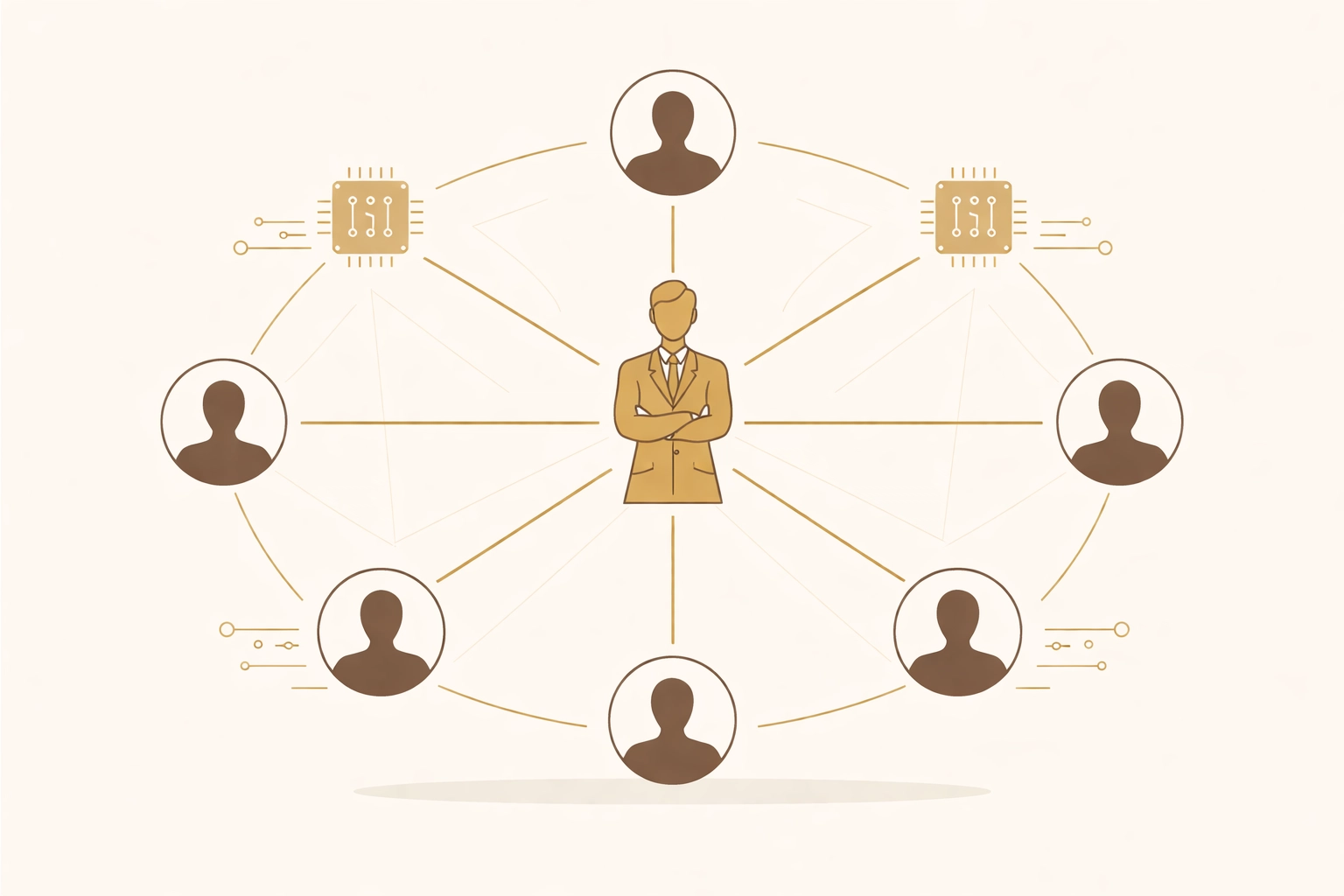
When AI influences a recommendation, someone still needs to own the outcome. Define who has authority over which decisions, and make sure that authority doesn't get diluted by algorithmic suggestions.
This isn't about ignoring AI. It's about ensuring human judgment remains the final filter.
3. Redesign Processes Alongside Implementation
As AI accelerates insight generation, the freed-up time should be invested in stronger deliberation: not rushed decisions.
If your team is moving faster but deciding worse, you haven't gained anything. Build in checkpoints for synthesis, alignment, and course correction.
4. Develop Organizational AI Literacy
The skills gap extends beyond data scientists. Your sales managers need to understand what AI can and can't do. They need to know when to trust the model and when to trust their experience.
A workforce that views AI as an enabler rather than a threat will embrace and effectively deploy these systems. But that requires investment in education, not just implementation.
5. Implement Explainability as a Requirement
Stakeholders: your board, your team, your customers: must understand the reasoning behind AI-influenced decisions. Explainability transforms opaque recommendations into auditable decisions, maintaining human oversight and accountability.
If you can't explain why the AI suggested something, you shouldn't act on it blindly.
Human Judgment Still Holds the Reins
Here's the bottom line: AI's role is to accelerate analysis, provide faster and more objective answers, and augment decision-making. But human judgment remains essential to crafting strategic vision.
AI can tell you what's happening. It can even predict what might happen next. But it can't tell you what should happen: what aligns with your values, your market position, your long-term goals.
That's your job. And it's a job that requires decision clarity and judgment discipline now more than ever.
Take the Next Step
We've been digging deep into this topic because we believe it's the defining challenge for sales leaders in 2026 and beyond. AI isn't going away. The complexity will only increase.
The question is: will your leadership structure keep pace?
If you want to explore this further, we've put together a resource that goes deeper into how AI is already influencing your company's decision architecture: and what you can do about it.
Download the PDF: "AI Is Already Influencing Your Company"
It's a quick read, but it might shift how you think about the intersection of AI, strategy, and leadership.
We're in this together. Let's make sure the humans stay in charge.
If AI Is Influencing Your Decisions More Than You Think, Start Here.
Leaders feel the shift before they can articulate it:
faster outputs, cleaner dashboards, weaker explanation.
If that resonates, you’re already in the zone where governance matters more than tooling.
Get the brief. Fix the structure.
Then lead from clarity — not drift.
We hate SPAM. We will never sell your information, for any reason.
